









I stared at my analytics dashboard, confused why my best videos were suddenly flatlining. The old tricks of catchy thumbnails and keyword stuffing weren’t just failing; they were actively hurting my reach. That’s when I realized the game hadn’t just changed—it had been completely reinvented.
We have entered a terrifying new reality where human clicks matter less than machine understanding. If you are still optimizing for a search bar, you are already behind. The new gatekeepers are AI engines, and they don’t care about your personality.
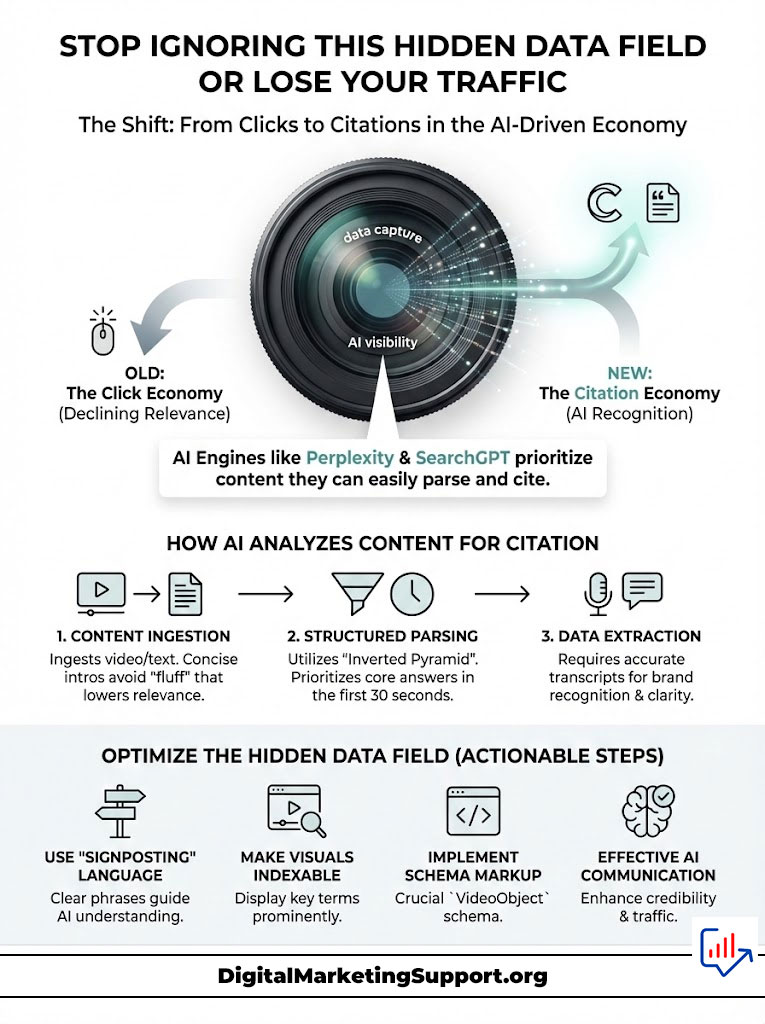
I discovered a new methodology called Video GEO that turned everything around. It’s not about ranking #1 anymore; it’s about becoming the only answer the AI provides. Here is the blueprint that restored my faith in digital growth.
Want a deeper breakdown? Read the complete article Video GEO SEO: How to Get YouTube Videos Cited by AI?
The Death of the Click
We used to fight for attention. Now, we must fight for attribution. AI engines like Perplexity and SearchGPT don’t want to send users to your channel.
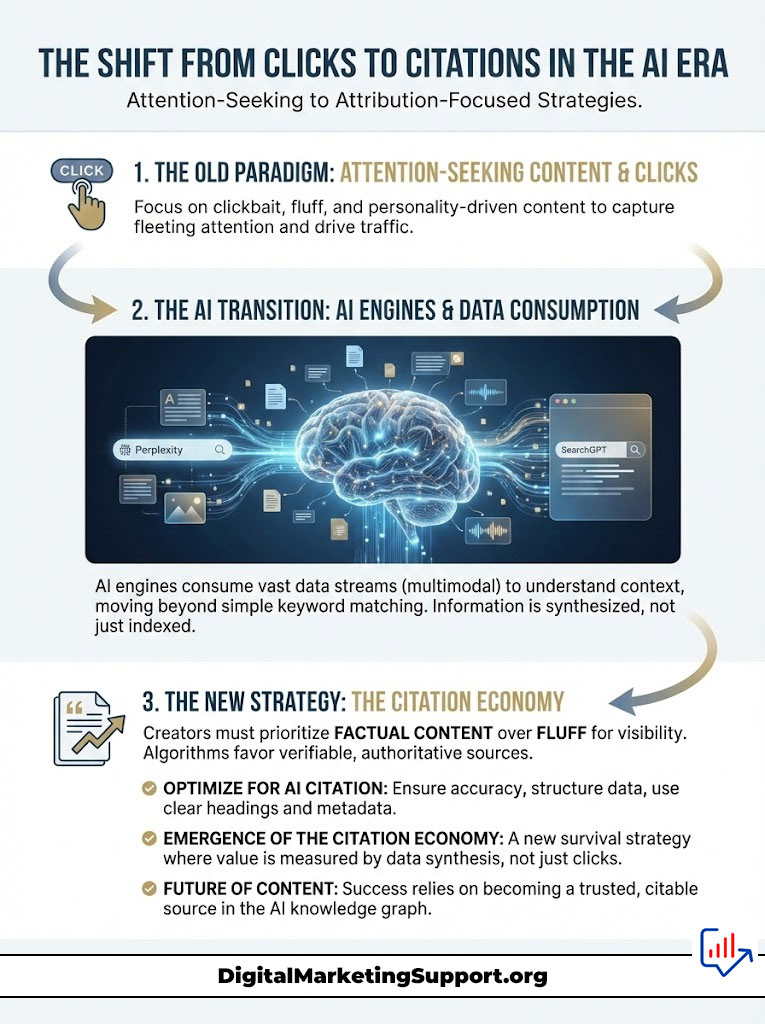
They want to ingest your data and give the answer directly. This is the nightmare scenario for creators who rely on fluff. If your video is 90% personality and 10% facts, you are invisible.
I found that to survive, we must pivot to the “Citation Economy.” Your goal is no longer a view; it is a citation in the footnote of an AI-generated answer.
How AI Actually “Watches” Your Content
Modern algorithms are multimodal, meaning they process three data streams at once. They don’t just read your title.
- Audio Decoding: They listen to every phoneme to detect tone and accuracy.
- Visual Scanning: They read the text on your screen (OCR) every second.
- Time Mapping: They link your words to your visuals to verify facts.
The “Fluff” Trap Is Killing Your Reach
For years, I made the mistake of long, winding introductions to build rapport. I thought I was being engaging. In reality, I was polluting my own data stream.
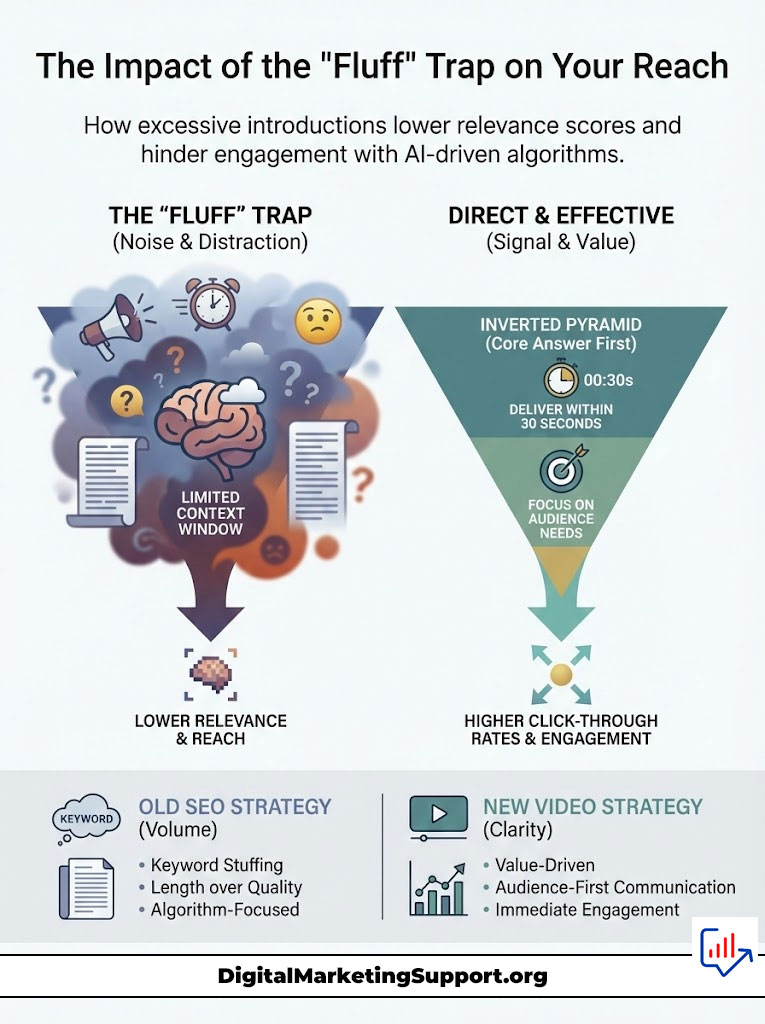
AI models have a limited “context window.” If you fill the first two minutes with “Hey guys, welcome back,” the machine treats it as noise. It lowers your relevance score immediately.
My experience proves that you must adopt the “Inverted Pyramid” style. Give the core answer in the first 30 seconds. This is essential for the algorithm to categorize you correctly.
Optimization Comparison
| Feature | Old School SEO | New Video GEO |
|---|---|---|
| Primary Goal | Click-Through Rate (CTR) | Information Gain |
| Intro Style | Hook & Tease | Direct Answer |
| Keywords | Repeated Phrases | Entity Concepts |
| Success Metric | Watch Time | AI Citation |
| Target Audience | Humans | Large Language Models |
Engineering Your “Digital DNA”
To win, you must feed the bots exactly what they crave. This starts with your transcript. I learned the hard way that auto-captions are a liability.
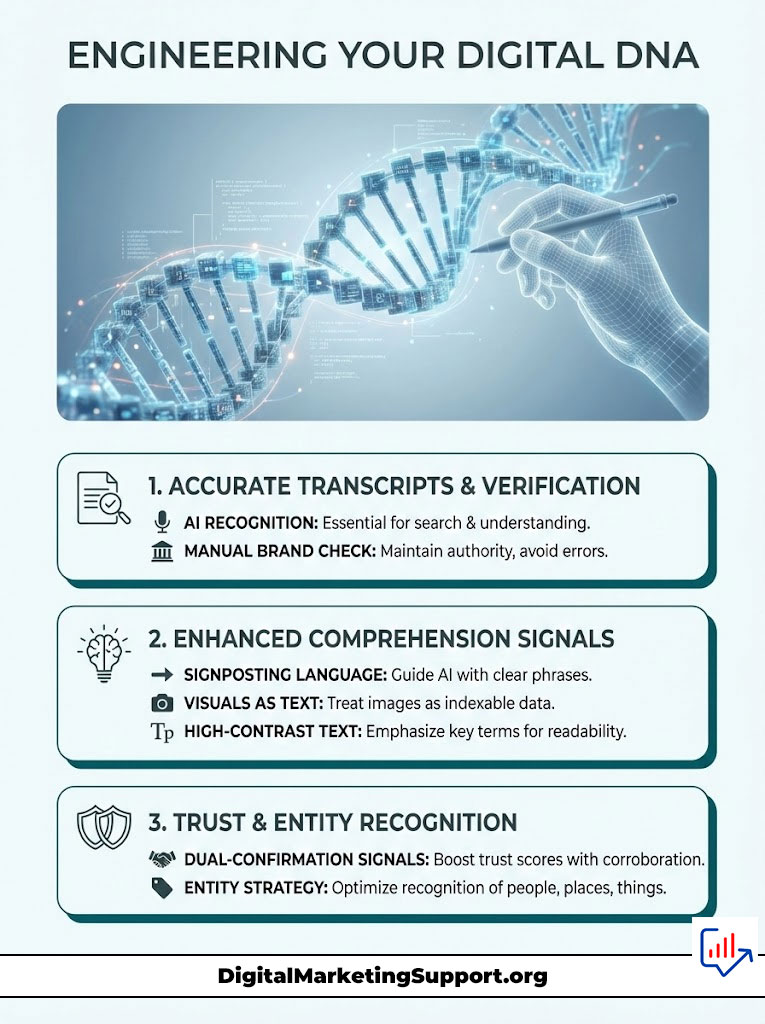
If the AI mishears your brand name, you lose that authority signal. You must verify every word manually. This is the secret to ensuring your entities are recognized.
Furthermore, use “signposting” language. Say phrases like “The three core factors are…” explicitly. This acts like a bold highlighter for the machine’s logic processor.
The Visual Data Layer
Your video visuals are now indexable text. I started treating my video screen like a PowerPoint slide for a scanner.
Use huge, high-contrast text for key terms. If you say “Model X,” show “Model X” on the screen simultaneously.
This creates a “dual-confirmation” signal. It tells the AI, “This fact is verified.” It is a genius way to boost your trust score.
The Technical Safety Net
You cannot ignore the code underneath. Schema markup is your way of speaking directly to the crawler. specifically the `VideoObject` schema.
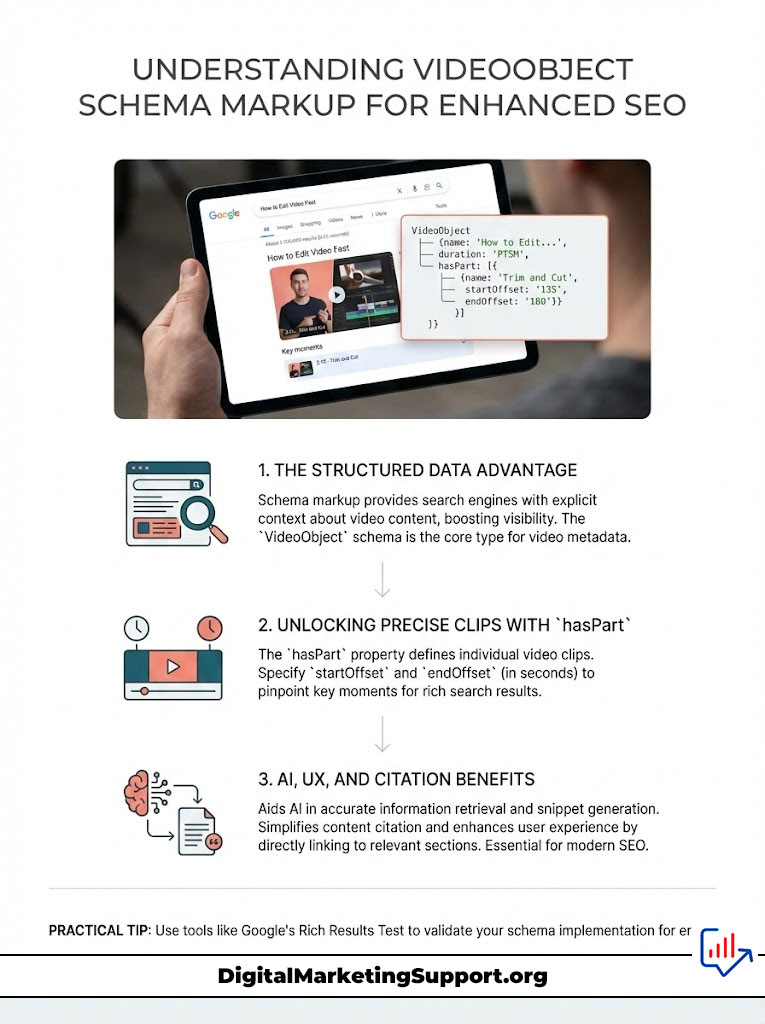
I found that adding the `hasPart` property was a game-changer. This allows you to define specific clips with start and end times.
It essentially spoon-feeds the AI the exact “chunk” of information it needs to answer a user’s question. This makes citation incredibly easy for the system.
A Story of Redemption
Implementing these changes feels mechanical, but the results are purely emotional. One struggling coding channel I tracked applied these fixes.
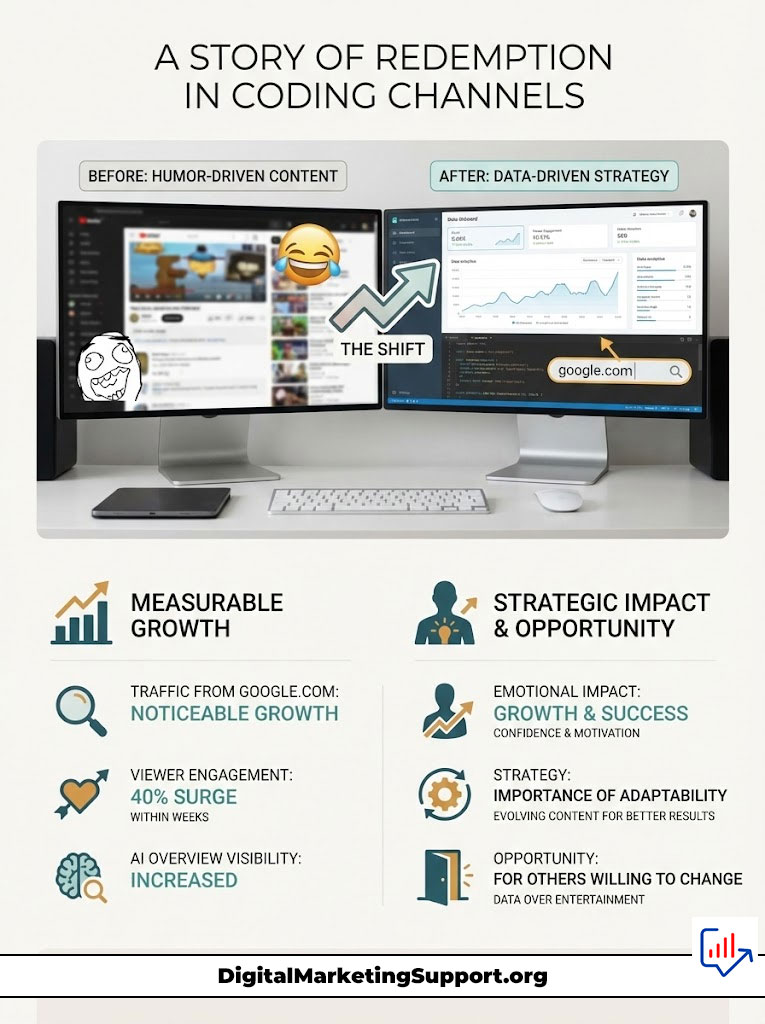
They stopped trying to be funny and started being dense with data. Within weeks, their traffic from “google.com” surged by 40%.
They weren’t getting more YouTube searches; they were appearing in AI overviews. Seeing that growth return is an incredible feeling. The opportunity is there for anyone willing to adapt.