








Optimizing for Perplexity and Claude search requires a fundamental shift from traditional keyword targeting to Generative Engine Optimization (GEO). To achieve visibility, content must be structured for Retrieval-Augmented Generation (RAG) compatibility by providing authoritative, data-dense, and citation-backed answers. Key strategies include securing high-trust brand mentions, implementing robust structured data for AI, and utilizing direct-answer formatting that Large Language Models (LLMs) can easily ingest and attribute as a primary source.
The era of ten blue links is effectively over. Users are no longer just searching for a list of websites; they are asking for synthesized answers. When a potential customer asks a complex question about enterprise software or medical symptoms, they are increasingly doing so through an interface that reads the internet for them. This is the reality of the shift toward AI search visibility.
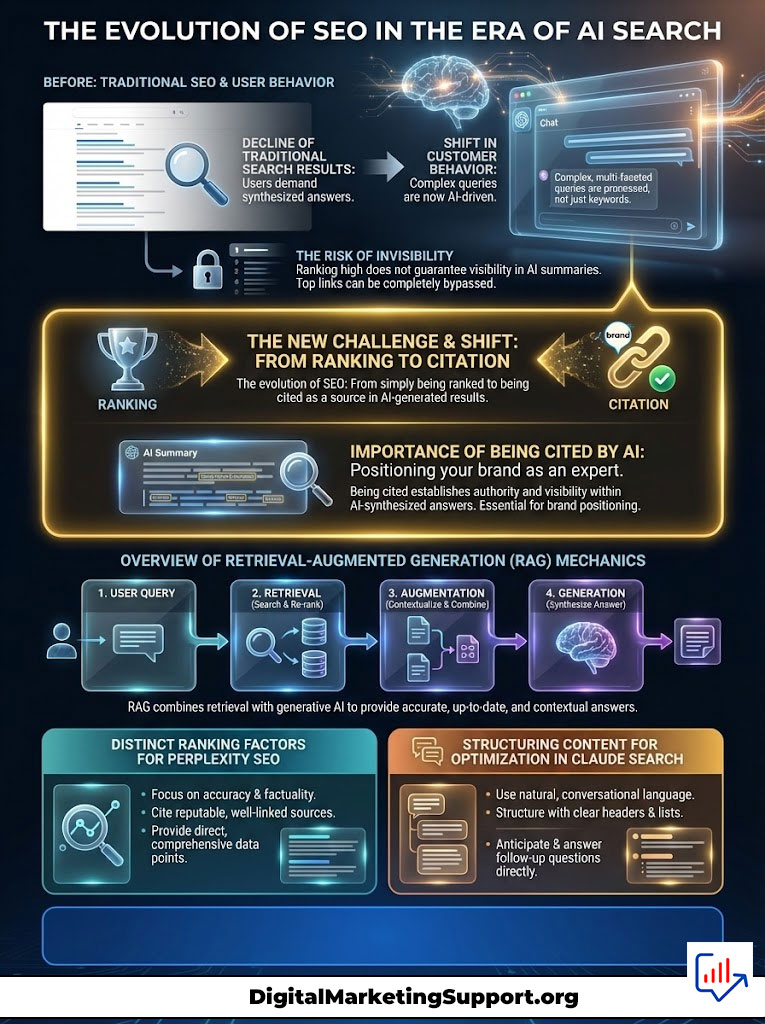
Marketing teams that ignore this transition risk becoming invisible. You might rank number one on Google for a specific keyword yet be completely absent from the answer generated by Perplexity or Claude. The traffic that used to flow directly to your homepage is now being intercepted and summarized by an algorithm.
This is not the death of SEO. It is the evolution of it. Optimizing for Perplexity & Claude search is about ensuring that when the AI summarizes the web, your brand is the expert it quotes. It is about moving from “ranking” to “citation.”
This guide provides the technical roadmap to survive this shift. We will dismantle the mechanics of Retrieval-Augmented Generation (RAG), explore the distinct ranking factors for Perplexity SEO, and detail how to structure your content for Claude search optimization.
The Era of Answer Engines: From SEO to GEO
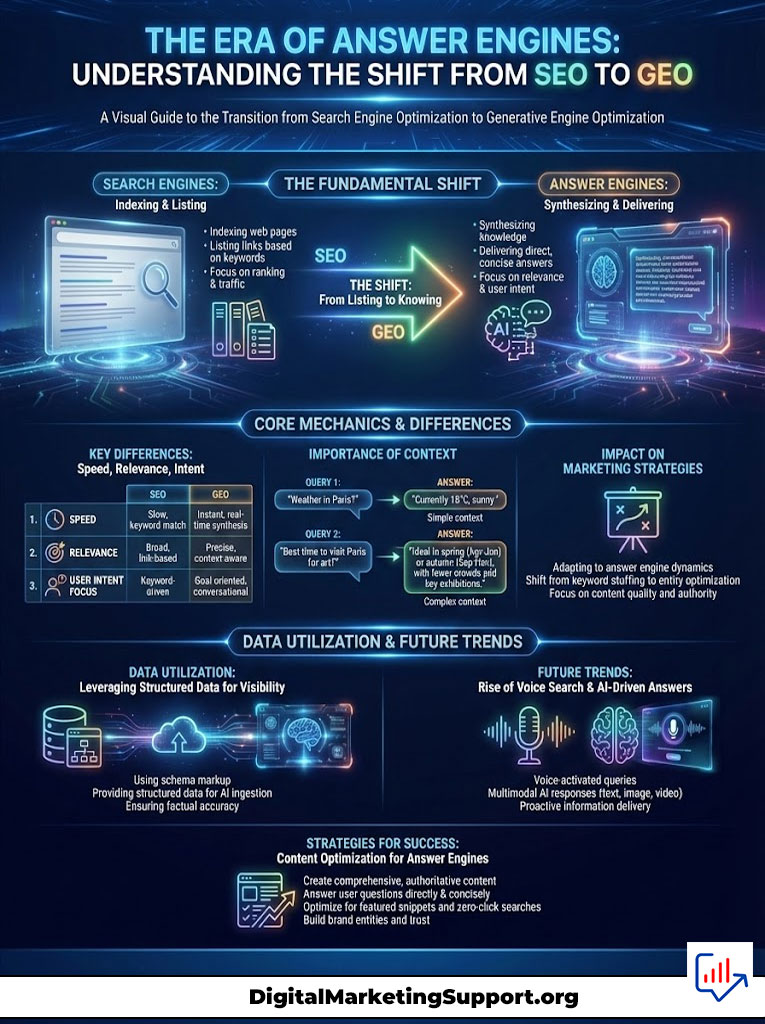
To win in this new environment, we must understand the difference between a search engine and an answer engine. A search engine indexes lists. An answer engine synthesizes knowledge.
Understanding Generative Engine Optimization (GEO)
Generative Engine Optimization (GEO) is the strategic process of creating content specifically designed to be understood, validated, and synthesized by AI models. Unlike traditional SEO, which focuses on metadata and backlinks to signal relevance to a crawler, GEO focuses on information density and authority to signal trust to a neural network.
The goal of Generative Engine Optimization (GEO) is simple. You want the AI to read your content and decide that it is the most factual, concise, and accurate answer to a user’s prompt. If you achieve this, you earn the citation.
This requires a departure from “fluff” content. AI search visibility plummets when content is filled with anecdotes or vague introductions. GEO rewards directness. It rewards facts. It rewards structure.
The Mechanics of RAG (Retrieval-Augmented Generation)
At the heart of Perplexity SEO and Claude search optimization lies a technology called Retrieval-Augmented Generation (RAG). Understanding RAG is non-negotiable for modern marketers.
RAG is the process where an LLM (like GPT-4 or Claude 3.5 Sonnet) retrieves external data to answer a query before generating a response. When a user asks Perplexity a question, the system does not just rely on what it learned during training. It actively scans the live web to find current information.
The RAG process works in three steps:
- Retrieval: The system searches its index or the live web for documents relevant to the prompt.
- Augmentation: It feeds those documents into the context window of the AI model.
- Generation: The AI writes an answer based only on the retrieved documents.
If your content is difficult to retrieve or hard for the machine to parse, it will be ignored during the augmentation phase. Optimizing for Perplexity & Claude search is essentially optimizing for the retrieval stage of RAG.
Deep Dive: Optimizing for Perplexity AI
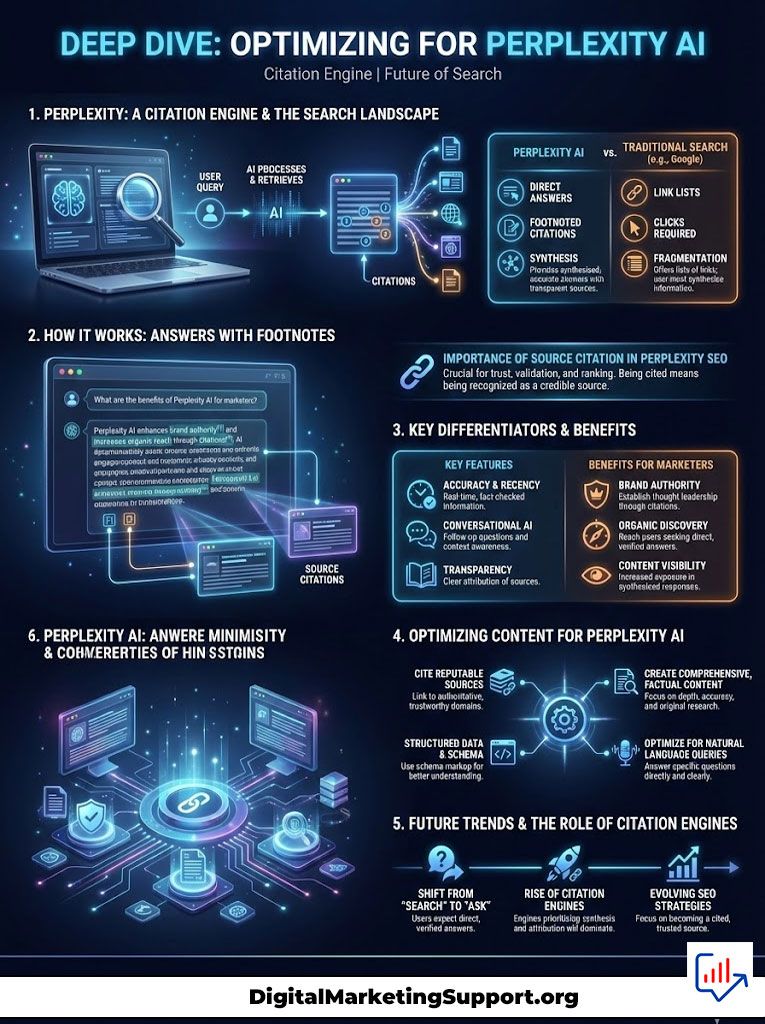
Perplexity is currently the leading “citation engine.” It markets itself as a replacement for Google, offering answers with footnotes. Perplexity SEO is distinct because the platform explicitly cites its sources in the interface.
How Perplexity’s Discovery Engine Works
Perplexity functions as a discovery engine that prioritizes domain authority and recency. It does not browse the entire web for every query. Instead, it relies on a curated index of high-trust domains.
These domains typically include major news outlets, academic repositories, government databases, and highly authoritative niche sites. If you want to master Perplexity SEO, you cannot just publish content on a low-authority blog and expect it to be picked up.
The engine also uses a “Pro Search” feature. This breaks down complex user queries into smaller sub-questions. For example, if a user asks about “best CRM software,” Perplexity might internally search for “CRM pricing,” “CRM reviews 2025,” and “CRM integration features” separately. Your content needs to answer these sub-questions clearly.
The Importance of Citations and Source Cards
In the world of Perplexity SEO, the “Source Card” is the new number one ranking. These are the clickable boxes that appear at the top of the answer.
To earn a spot in the Source Cards, you must focus on brand mentions in third-party data sources. Perplexity trusts what others say about you more than what you say about yourself.
If your brand is mentioned in a Bloomberg article, a Crunchbase profile, or a highly upvoted Reddit thread, Perplexity is more likely to pull that data. AI search visibility on Perplexity is often a result of digital PR rather than technical on-page SEO.
You must audit where your brand appears online. If the only place your pricing is listed is on your own website, Perplexity might hesitate to cite it if it conflicts with other data. If your pricing is corroborated on G2 or Capterra, the AI views it as verified fact.
Formatting for the “Direct Answer”
To improve Perplexity SEO, you must adopt the “Inverted Pyramid” style of writing. Journalists have used this for decades; now SEOs must use it for machines.
Do not bury the lead. If the keyword is “SaaS customer acquisition cost,” your H2 should be the question, and the very first sentence of the paragraph should be the definition or the average metric.
Perplexity SEO favors content that looks like a definition. Avoid starting paragraphs with “In this section, we will explore…” Instead, start with “Customer Acquisition Cost (CAC) is defined as…”
This formatting allows the RAG system to easily “chunk” your content. If the AI can extract a clean 50-word definition, it will use it. If it has to parse through 300 words of storytelling to find the number, it will skip you.
Mastering Perplexity SEO with Data
Data tables are gold for Perplexity SEO. The engine excels at reading structured text. If you are comparing products, use a Markdown table.
Do not use images of tables. The AI cannot always reliably read text inside images during a live search crawl. Always render data as HTML or Markdown.
Additionally, use lists. Perplexity SEO thrives on lists because users often ask for “top 10” or “steps to” queries. Ensure your <li> tags are clean and your list items are concise.
Deep Dive: Optimizing for Claude (Anthropic)
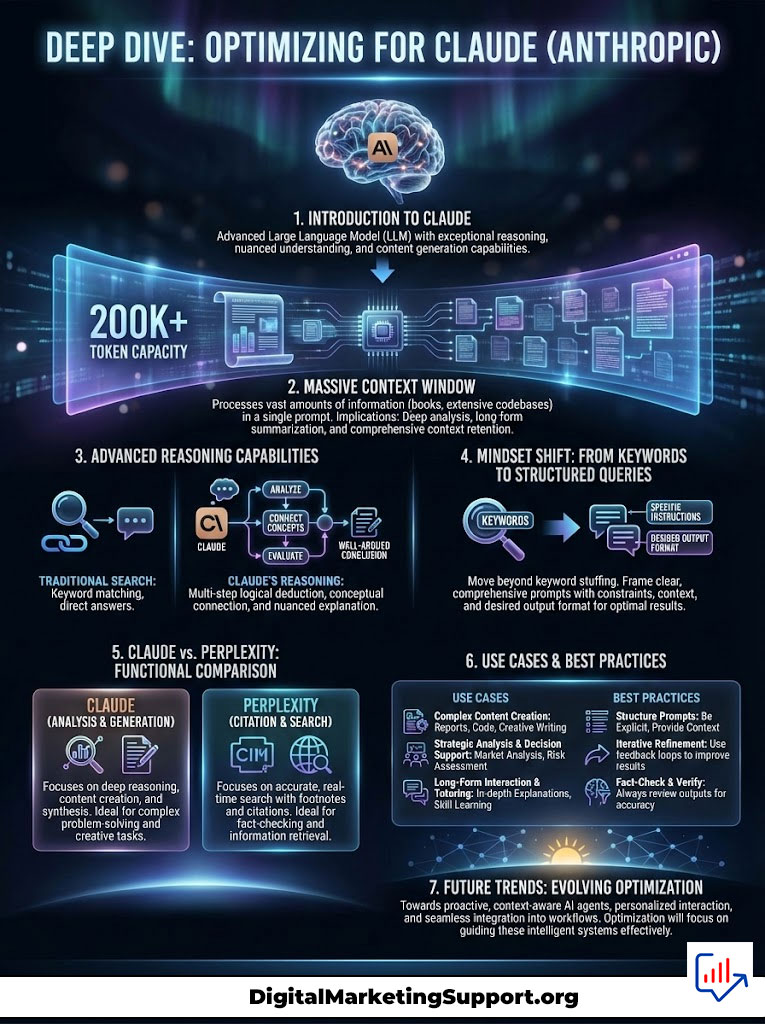
Claude search optimization requires a different mindset. While Perplexity is a search engine wrapper, Claude is an LLM with a massive context window and advanced reasoning capabilities.
The Power of the Large Context Window
Claude is famous for its ability to digest hundreds of thousands of words in a single prompt. This changes the game for Claude search optimization. It means that comprehensive, long-form content has a significant advantage.
Where Google might prefer a 1,500-word article, Claude prefers the “Ultimate Guide” or the whitepaper. To succeed in Claude search optimization, your content should aim to be the single source of truth for a topic.
If you can provide a 5,000-word deep dive that covers every angle of a subject, users (and developers using Claude via API) are more likely to feed your URL or text into the model.
Semantic Nuance and Reasoning
Claude is built to be “helpful, harmless, and honest.” It prioritizes nuance. Claude search optimization is less about exact keyword matching and more about logical flow.
The model is trained to follow a chain of thought. Your content should follow a logical progression: Problem, Analysis, Solution, validation.
For effective Claude search optimization, use transition words that signal logic. Words like “consequently,” “therefore,” “however,” and “specifically” help the model follow your argument.
Avoid absolute claims unless they are backed by data. Claude is fine-tuned to be skeptical of marketing hyperbole. If you say “we are the best tool,” Claude may ignore it. If you say “we reduce processing time by 40%,” Claude will process that as a fact.
File Readability and Data Analysis
Many users utilize Claude’s “Artifacts” or analysis features by uploading documents. Part of Claude search optimization is ensuring your downloadable assets are machine-readable.
If you publish PDFs, ensure they are text-based, not image scans. Use clear headers in your documents.
Furthermore, offering raw data (CSV or JSON snippets) within your technical articles can be a powerful tactic. Users often ask Claude to “analyze this data.” If your website provides the data in a clean format, you become the enabler of that interaction.
Comparative Analysis: Google vs. Perplexity vs. Claude
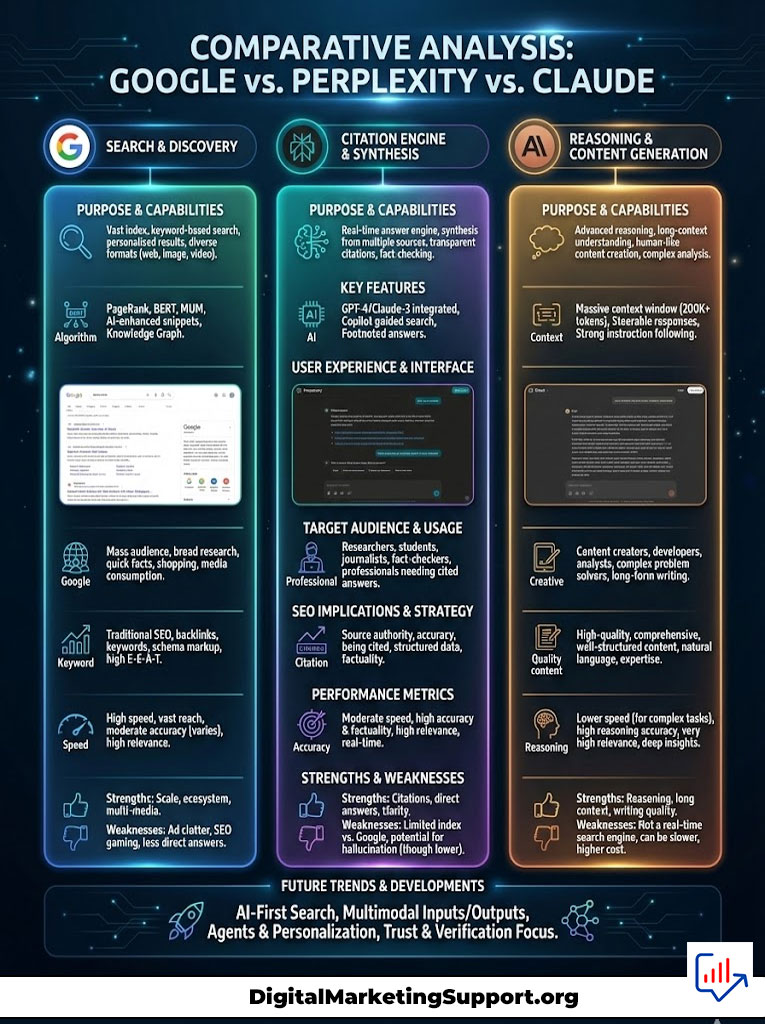
Understanding the differences between these platforms is vital for a holistic strategy. You cannot simply copy your Google strategy and expect AI search visibility.
Differences in Ranking Signals
Google relies heavily on backlinks and keyword density in headers. Perplexity SEO relies on domain authority of the source and the conciseness of the answer. Claude search optimization relies on semantic depth and the logical coherence of the text.
The user intent also differs. Google is often for navigation (finding a site). Perplexity is for information (finding an answer). Claude is for creation and analysis (synthesizing data).
Comparison of Search Ecosystems
The following table breaks down the core differences to help you align your Generative Engine Optimization (GEO) strategy.
| Feature | Google SEO | Perplexity AI | Claude (Anthropic) |
| Primary Goal | Drive traffic to a specific URL | Provide a direct, cited answer with footnotes | Synthesize deep knowledge & analysis |
| Ranking Priority | Backlinks, Keywords, Core Web Vitals | Authority Citations, Recency, formatting | Semantic Depth, Logical Flow, Token limit |
| User Intent | Browsing/Navigational/Transactional | Informational/Research/Transactional | Analytical/Creative/Coding |
| Content Format | HTML Pages, Media-rich layouts | Structured Text, Lists, Inverted Pyramid | Long-form Text, Documents, Code |
| Traffic Source | Direct Click (Organic) | Citation Link (Referral) | Integration/Synthesis (Brand Awareness) |
| Key Metric | Organic Traffic / CTR | Citation Frequency / Source Cards | Model Inclusion / Context Window |
Technical SEO for AI Visibility
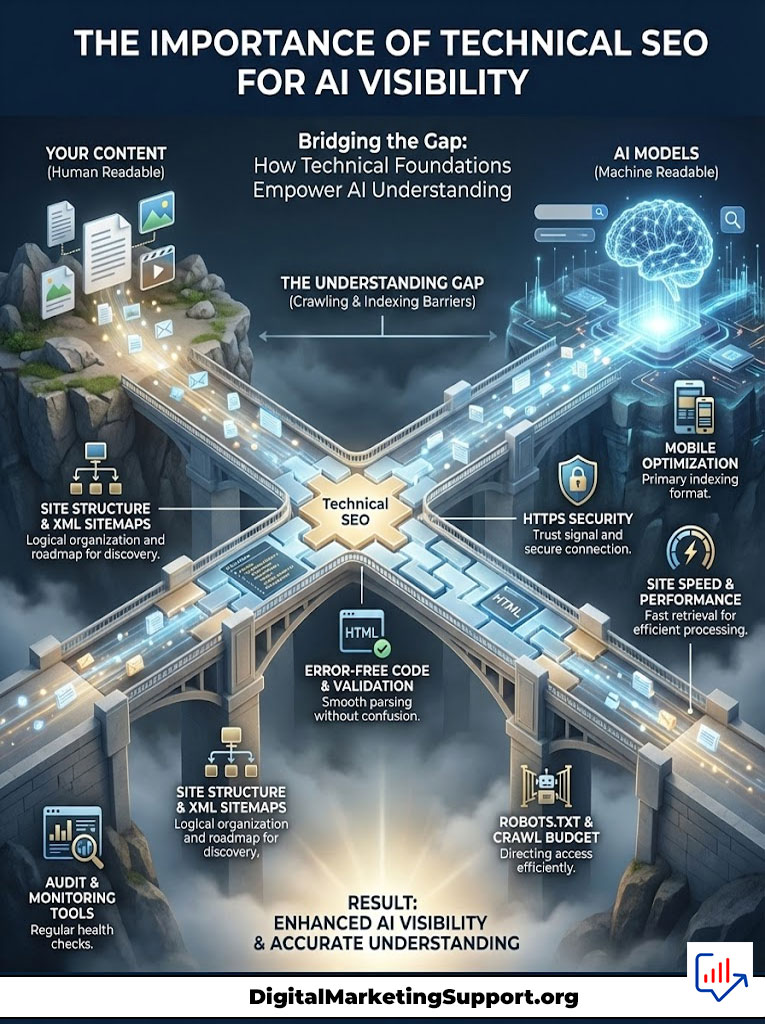
While the content is king, the code is the castle. Technical SEO remains a critical pillar of AI search visibility. Robots need to understand the structure of your site before they can understand the content.
Structured Data and Knowledge Graphs
Structured data for AI is the most powerful technical lever you have. Schema markup (JSON-LD) acts as a translator between your content and the machine.
You must implement Organization schema to tell the AI who you are. You must use SameAs properties to link your website to your Crunchbase, LinkedIn, and Wikipedia entries. This helps build the Knowledge Graph entry for your brand.
When Perplexity sees a Knowledge Graph entity, it trusts it. Structured data for AI removes the guesswork. Instead of hoping the AI figures out your product price, Product schema tells it explicitly.
Use FAQPage schema aggressively. This schema type is perfectly aligned with the Question-Answer format of Generative Engine Optimization (GEO).
Optimizing for Machine Readability
AI search visibility depends on your site’s renderability. If your content is hidden behind complex JavaScript execution or “Click to Expand” buttons, the RAG crawler might miss it.
Serve critical text in the raw HTML. Keep your DOM (Document Object Model) clean.
Additionally, use semantic HTML tags. The <article>, <section>, and <aside> tags help the AI understand the hierarchy of the page. This is crucial for Perplexity SEO, which needs to differentiate between the main content and the sidebar ads.
Content Strategy: Building Topical Authority
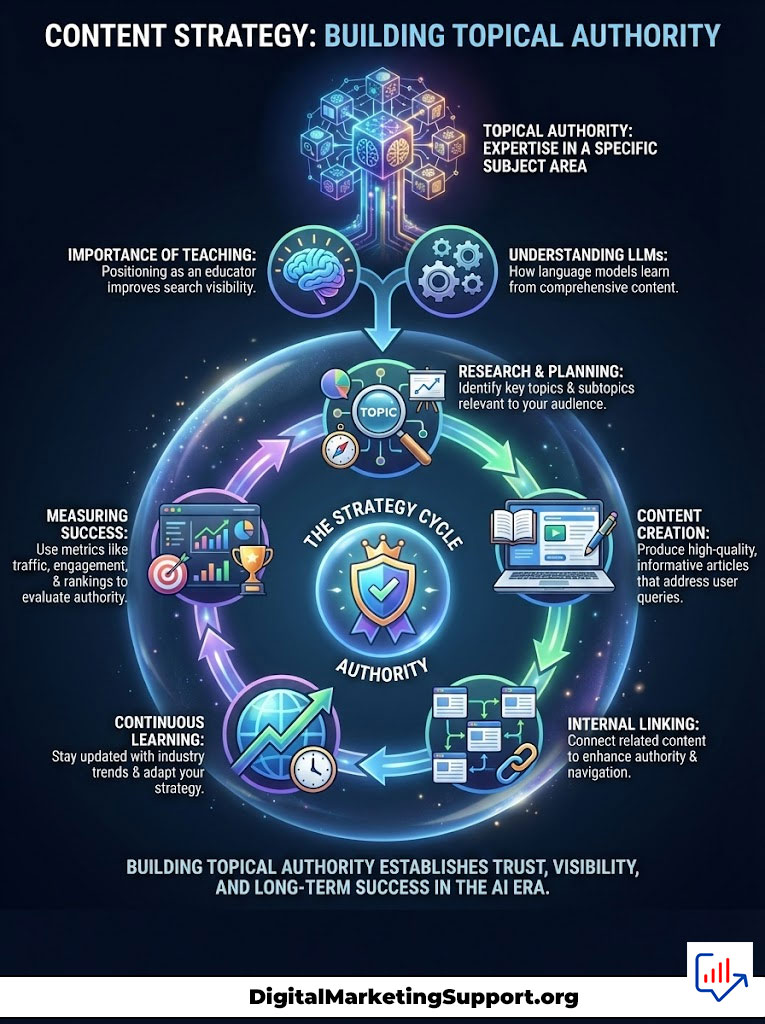
You cannot trick an LLM. You can only teach it. To gain AI search visibility, you must become the teacher. This requires building massive topical authority.
The Role of E-E-A-T in AI Training
Experience, Expertise, Authoritativeness, and Trustworthiness (E-E-A-T) are not just Google concepts. They are training filters. High-quality datasets used to train models like Claude often exclude low-quality domains.
To improve Claude search optimization, ensure your content is authored by credible experts. Include detailed author bios with links to their LinkedIn profiles.
Citations matter here too. Link out to high-authority sources. This signals to the AI that your content is rooted in verified data. Generative Engine Optimization (GEO) rewards content that participates in the ecosystem of truth.
Targeting “People Also Ask” and Conversational Queries
The search bar is being replaced by the chat window. This means keywords are becoming questions. You must optimize for conversational queries.
Users do not type “CRM software” into Claude. They type, “What is the best CRM software for a small real estate business with a limited budget?”
Your content strategy must capture these conversational queries. Identify the long-tail questions in your niche. Use tools to scrape “People Also Ask” boxes.
Create content that answers these specific scenarios. Perplexity SEO thrives on specificity. If you have a section dedicated exactly to “CRM for small real estate businesses,” you are highly likely to be the citation for that query.
Information Density vs. Word Count
Old SEO taught us to write 2,000 words to rank. Generative Engine Optimization (GEO) teaches us to write 2,000 valuable words.
Information density is the ratio of facts to words. If you write three paragraphs of fluff before getting to the point, the AI assigns a low information density score.
Every sentence should earn its keep. Delete the intros. Delete the “In conclusion” summaries that just repeat points. Add unique statistics. Add contrarian viewpoints. Add new data.
High information density is a core signal for Claude search optimization. The model wants to ingest maximum knowledge with minimum token usage.
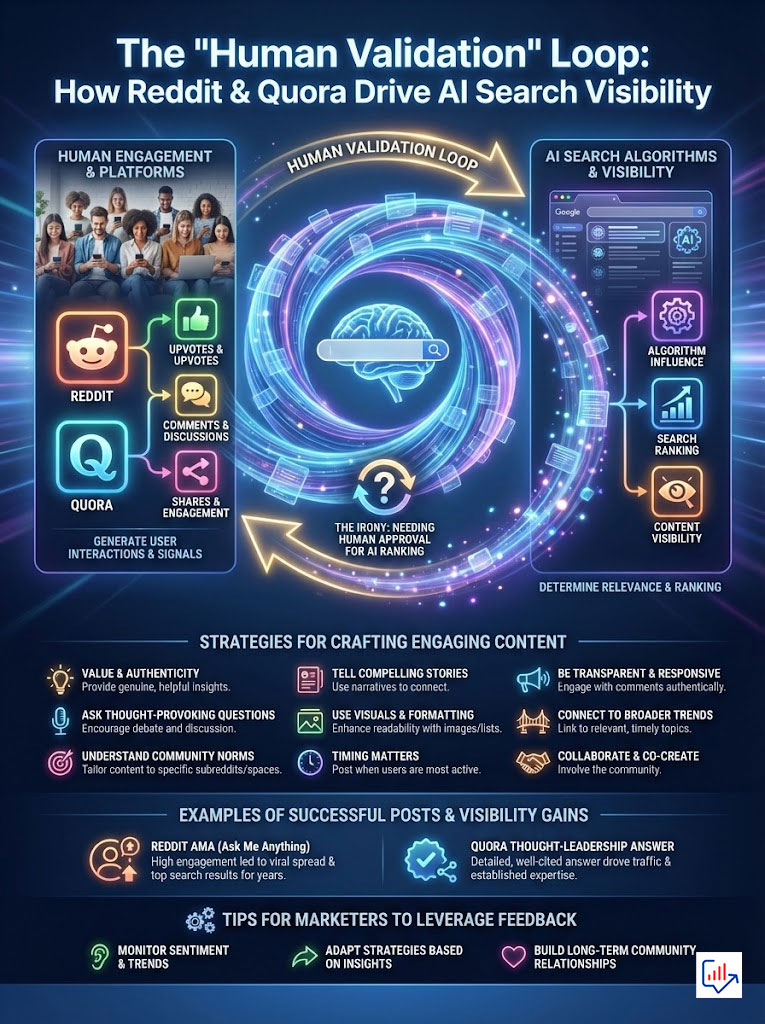
The “Human Validation” Loop: Reddit & Quora
It is ironic that to rank for robots, you must impress humans. But that is the reality of AI search visibility.
Why AI Loves Forums
LLMs are trained on massive scrapes of Reddit and Quora. Why? Because these platforms represent unfiltered human consensus.
When a user asks Perplexity for the “best running shoes,” the AI often cross-references its index with Reddit threads to see what real runners are saying.
If your brand is never mentioned in these discussions, you have a gap in your Generative Engine Optimization (GEO). You are missing the “social proof” layer that RAG systems look for.
Strategy for Community Management
To improve Perplexity SEO, you need a legitimate community strategy. You cannot spam these platforms. AI models are getting better at detecting sentiment and shilling.
You must foster genuine conversation. Engage with users who mention your brand. Encourage your happy customers to share their experiences in public forums.
When your brand has a high volume of positive, organic mentions on Reddit, it sends a strong signal to the AI that you are a relevant entity. This is brand mentions strategy 2.0.
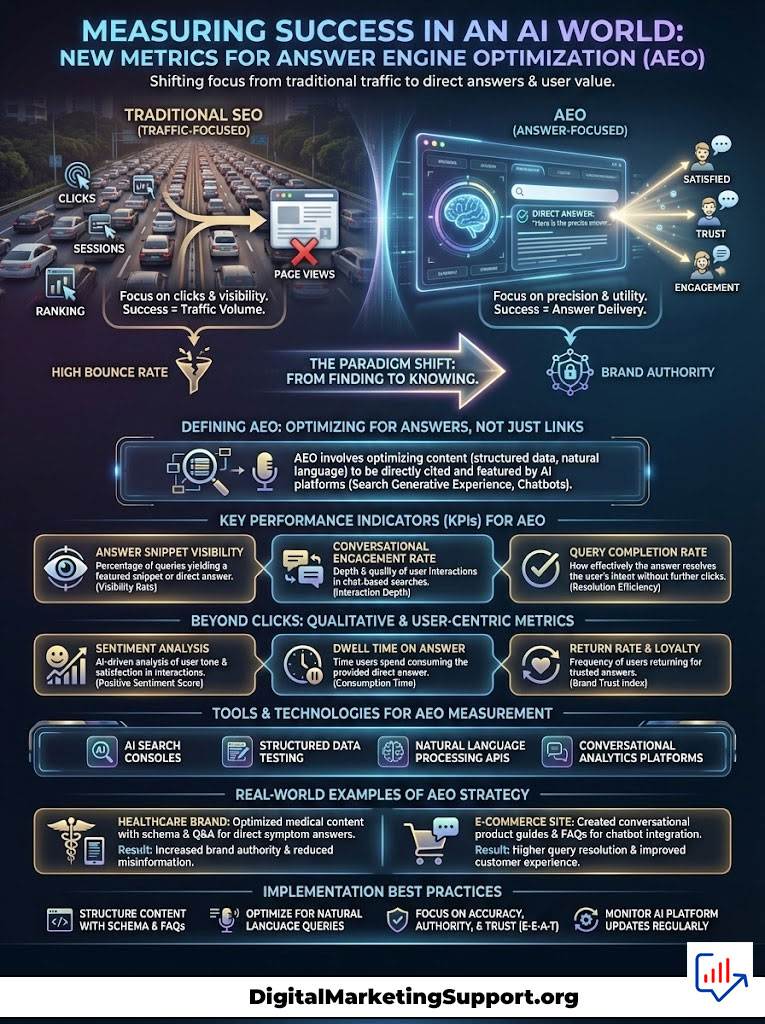
Measuring Success in an AI World
The days of obsessing over a single traffic graph are gone. We need new metrics for Answer Engine Optimization (AEO).
Beyond the Click: Share of Model (SOM)
“Share of Model” is the new “Share of Voice.” It measures how often your brand is cited when an AI answers a category-relevant question.
To track this, you must perform manual or automated testing. Ask Perplexity 50 questions related to your industry. How many times is your brand mentioned? How many times are you the primary citation?
This metric is the true gauge of your AI search visibility.
Tracking Brand Sentiment
It is not enough to be mentioned; you must be mentioned positively. Brand mentions carry sentiment.
If Claude cites you but says, “Users often complain about the high price,” you have failed. You need to conduct sentiment analysis on the AI responses.
Regularly audit the output. If the AI is hallucinating negative facts about your brand, you need to create content that corrects the record and distribute it on high-authority channels that the AI trusts (like press releases or updated documentation).
Practical Implementation Guide (Checklist)
Transitioning to Generative Engine Optimization (GEO) can be overwhelming. Use this checklist to prioritize your actions.
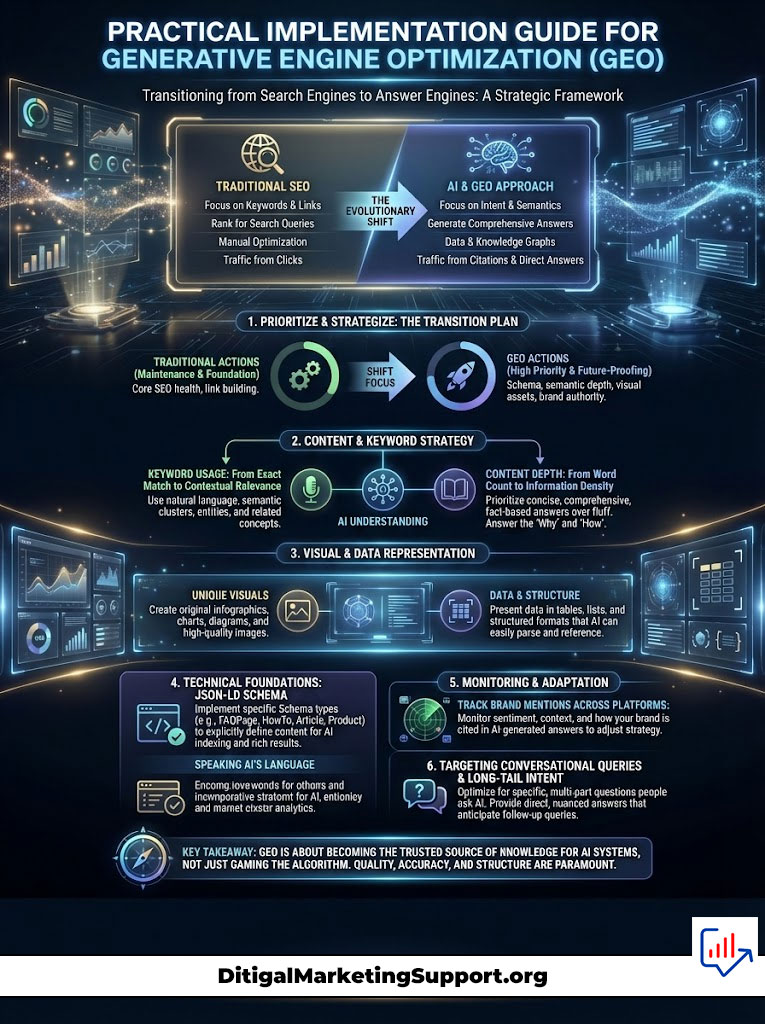
| Traditional SEO Approach (Do Less) | AI/GEO Approach (Do More) |
| Keyword stuffing in H2s | Answering questions directly in H2s (Natural Language) |
| Generic stock images | Unique data charts, Markdown tables & infographics |
| 500-word shallow blog posts | 2,500+ word comprehensive deep-dives (Topic Clusters) |
| Ignoring schema markup | Full implementation of JSON-LD Schema (Org, Product, FAQ) |
| Focusing only on Google rankings | Monitoring brand mentions on Reddit, Wikipedia & News |
| Writing for word count | Writing for Information Density (High value per token) |
| Targeting head terms | Targeting conversational queries & long-tail intent |
Future-Proofing Your Digital Strategy
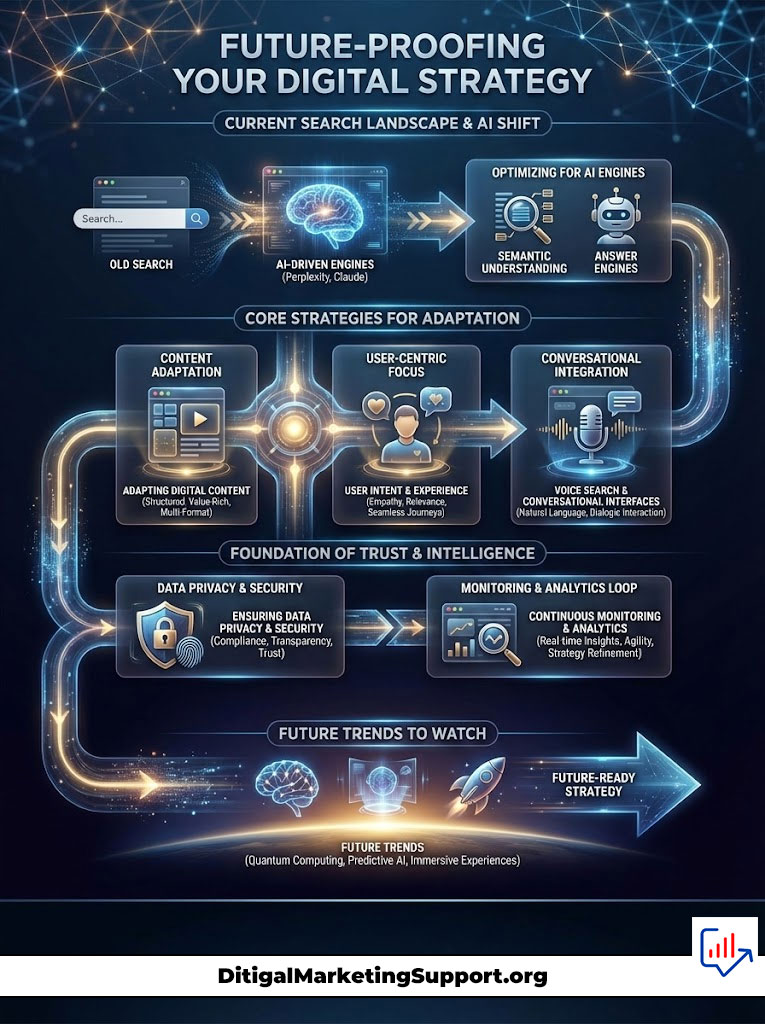
The landscape of search is changing faster than ever. Optimizing for Perplexity & Claude search is just the beginning.
The Convergence of Search and Chat
Eventually, the line between “Search” and “Chat” will disappear completely. Users will expect a conversation with their search engine.
Your content needs to be ready for this dialogue. It needs to be the script that the AI reads from. This is why conversational queries and natural language optimization are critical investments today.
Preparing for Multimodal Search
We are also moving toward multimodal search. Users will search with images and video. Perplexity and Claude are already integrating vision capabilities.
Ensure your images have descriptive alt text. Ensure your videos have transcripts. The AI needs to “read” your visual assets to include them in the answer.
Conclusion
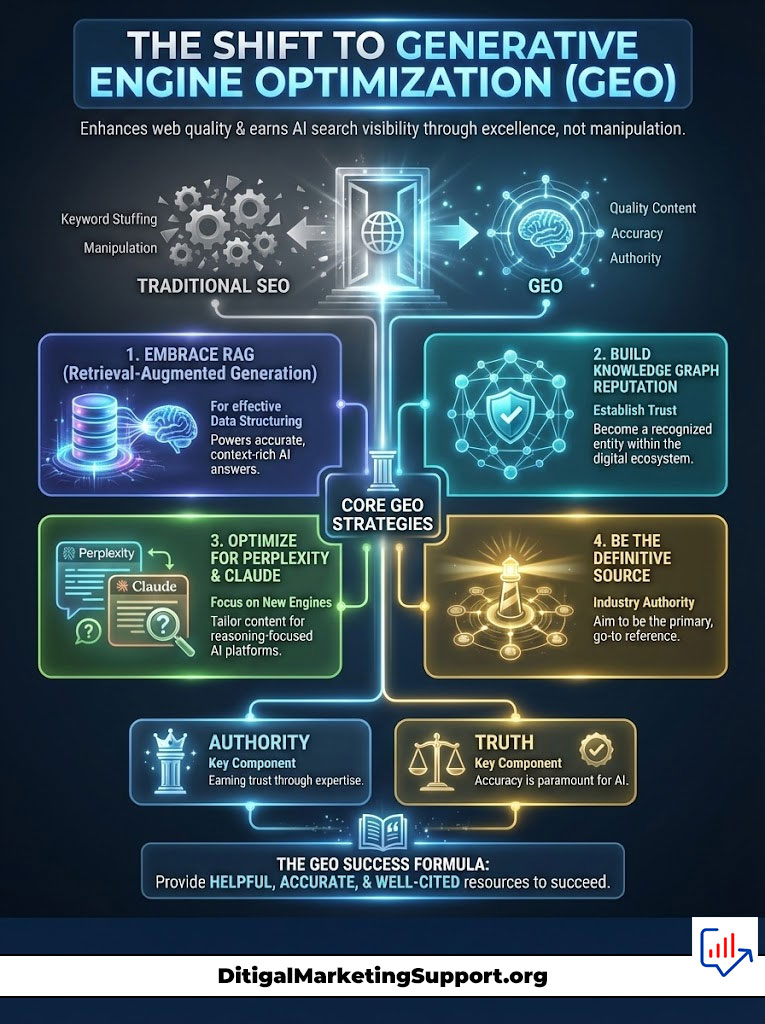
The shift to Generative Engine Optimization (GEO) is a call to elevate the quality of the web. AI search visibility is not granted to those who hack the algorithm; it is earned by those who provide the best answers.
To succeed, you must embrace Retrieval-Augmented Generation (RAG). You must structure your data for machines. You must build a reputation that permeates the knowledge graph.
Optimizing for Perplexity & Claude search is about becoming the definitive source. It is about authority. It is about truth.
If you focus on being the most helpful, accurate, and cited resource in your industry, the algorithms will find you.
Frequently Asked Questions (FAQs)
Disclaimer: The strategies outlined in this article regarding AI search algorithms are based on current observations of Large Language Models (LLMs) and retrieval systems. As AI technology evolves rapidly, ranking factors for platforms like Perplexity and Claude are subject to change without notice. Marketers should continuously test and adapt their strategies.
References
- Anthropic System Card (Claude 3 Model Family)
- Perplexity AI FAQ & Publisher Guidelines
- Google Search Central: Structured Data Documentation
- Princeton University Study on Retrieval-Augmented Generation (RAG) Accuracy